Tawdheef x Zaheb 2026: An Employer's Cultural Guide to Emiratisation Hiring in Abu Dhabi (Nov 17-19)
Tawdheef x Zaheb runs November 17 to 19, 2026 at ADNEC in Abu Dhabi. How multinational employers can get Emiratisation hiring right: majlis-culture relationship building at the stand, culturally calibrated onboarding, and retaining Emirati talent.
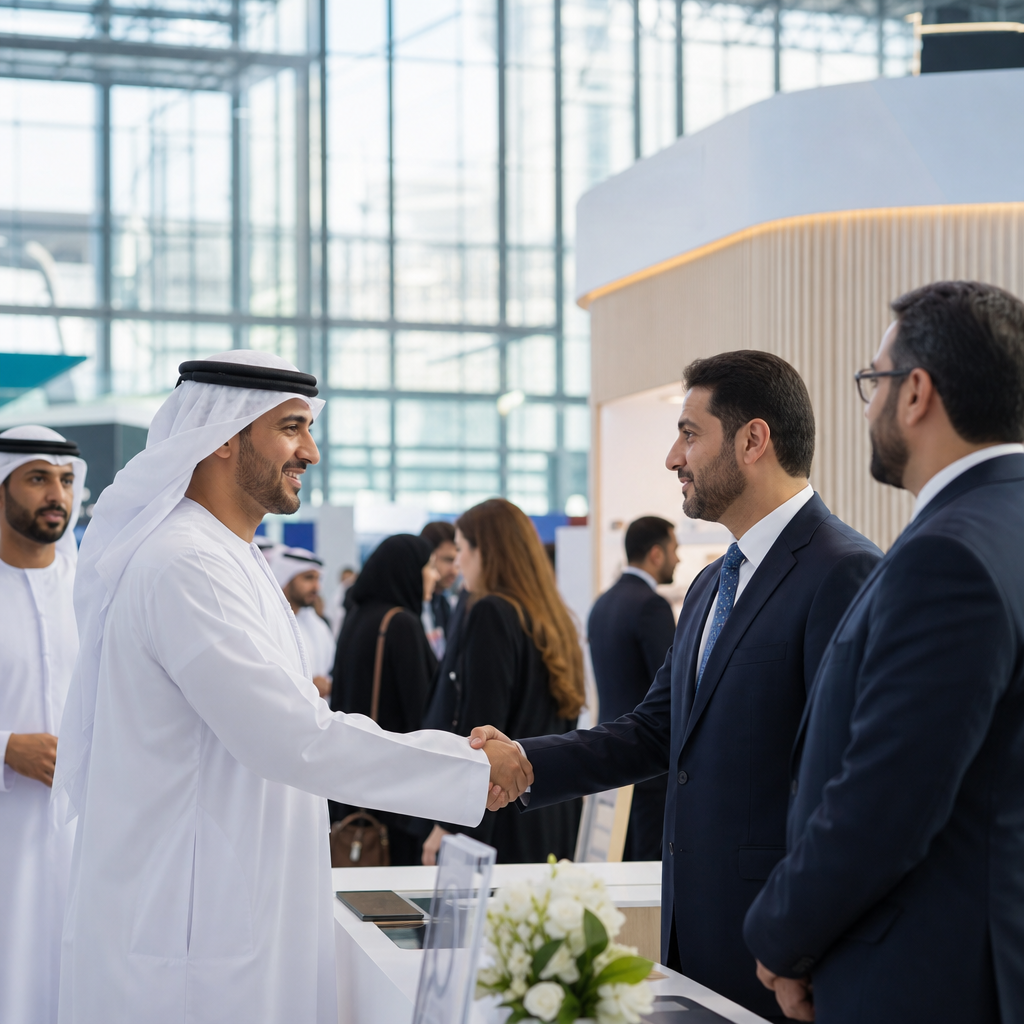
Tawdheef x Zaheb returns to the Abu Dhabi National Exhibition Centre (ADNEC) from November 17 to 19, 2026. It is the UAE's flagship Emiratisation and career development festival, where Emirati job seekers meet more than a hundred employers, government entities, and training providers across three days. If you lead HR, talent acquisition, or Emiratisation strategy at a multinational in the UAE, Tawdheef x Zaheb is the most concentrated moment of the year for your national-talent pipeline, and the cultural quality of what happens at your stand will decide what that pipeline looks like.
The employer's real challenge at an Emiratisation festival
Tawdheef x Zaheb is not a general recruiting expo, and treating it like one is the first mistake. The event exists to advance Emiratisation, the UAE government's long-running policy of increasing Emirati participation in the private sector. Emirati candidates arrive knowing that policy context, and so do the government entities present on the floor. For a multinational employer, the stand is therefore doing two jobs at once: attracting individual candidates, and demonstrating to candidates, families, and authorities alike that your organization genuinely develops national talent rather than merely counting it.
That second job is cultural, not logistical. An Emirati candidate at your booth is evaluating whether your company will invest in their long-term growth, whether it understands and respects Emirati culture, and whether your people carry themselves with the courtesy the culture expects. A hiring manager who treats a booth conversation as a five-minute screening call is quietly failing a test they did not know they were taking.
In Hofstede's 6-D terms, the UAE scores high on power distance and sits firmly on the collectivist side of the individualism dimension. In practice that means hierarchy is respected rather than flattened, family and network context matters in career decisions, and trust is built with the group around a person, not just the person. Trompenaars would describe the UAE as a diffuse, relationship-first culture: business and personal spheres overlap, and people commit to people before they commit to offers. A multinational whose booth team, interview process, and onboarding were all designed in a low power distance, individualist headquarters is running against the grain of all of that unless it consciously adapts.
Majlis-culture relationship building at your stand
Gulf hospitality culture is anchored in the majlis, the traditional sitting room where guests are received, coffee is poured, and conversation moves at a deliberately unhurried pace. Your ADNEC stand is not a majlis, but the majlis mindset governs how good conversations happen there, and the employers who internalize it stand out immediately.
- Open with courtesy, not agenda. Greet candidates properly and let the conversation warm up before any talk of roles or CVs. Rushing past pleasantries reads as disrespect, not efficiency.
- Respect the group. Emirati candidates may visit with friends or family members, which reflects how career decisions are actually made in a collectivist culture. Welcome the whole group; the people beside the candidate are part of the decision.
- Staff for hierarchy. In a high power distance culture, the seniority of the people at your stand communicates how seriously you take national talent. Candidates and government visitors expect to meet decision-makers, not only coordinators, and an Emirati colleague on the team signals more than any banner.
- Offer and accept hospitality with the right hand. Coffee, dates, business cards. If you serve gahwa at your own stand, you are speaking the culture's language of welcome.
- Let the pace breathe. Conversations in the Gulf tolerate interruptions and side greetings that would feel chaotic in Frankfurt or Toronto. This is normal polychronic time, in Trompenaars' terms, not a signal of disinterest.
Practical guidance for the three days
Dress and conduct. Conservative business dress for your team is the safe default. Many candidates will wear the white kandura or the black abaya; no comment on traditional dress is needed beyond normal professionalism.
Prayer times and scheduling. November prayer times in Abu Dhabi place midday (Dhuhr) and afternoon (Asr) prayers inside exhibition hours. Do not book back-to-back booth interviews across those windows, and never treat someone stepping away to pray as an interruption. The same logic applies to your interview scheduling after the event.
Arabic worth using. Nobody expects fluency, but as-salaam alaykum and its reply wa alaykum as-salaam, shukran (thank you), and marhaba (hello) change the temperature of a first meeting. A stand that greets in Arabic before switching to English signals respect that candidates remember.
Follow-up norms. The Gulf runs on WhatsApp. A brief, warm WhatsApp message the same evening will usually get a faster and friendlier response than a formal email. Save email for documents and formal offers, and follow up personally: routing a promising candidate to a generic talent-acquisition inbox after a warm booth conversation undoes the relationship your team just built.
After the offer: onboarding and retaining Emirati talent
The costliest Emiratisation failures happen after the hire, and they are cultural. A multinational that recruits well at Tawdheef x Zaheb and then drops its Emirati hires into an unmodified headquarters onboarding flow should expect early attrition, because the first ninety days are where the culture gap bites.
- Make the hierarchy legible. New Emirati hires join expecting a clear reporting structure and a manager who acts like one. Flat, figure-it-out-yourself onboarding, a badge of autonomy in Amsterdam or Sydney, reads as neglect in a high power distance culture.
- Assign a relationship, not just a checklist. A respected mentor, ideally a senior Emirati colleague where you have one, does more for retention than any portal. Trust forms through people first.
- Calibrate feedback. Blunt, public, individual critique damages face and trust. Deliver difficult feedback privately, frame it around the work, and give credit in ways that honor the team as well as the individual.
- Show the development pathway early. Emirati candidates consistently weigh long-term growth and standing. A written development plan in the first month, with named milestones and real training investment, is the strongest retention signal you can send, and it is also what distinguishes genuine Emiratisation from quota-filling.
- Respect the rhythms. Ramadan working hours, prayer times, and family obligations are not accommodations to be negotiated; they are the baseline of a workplace that Emirati professionals will stay in.
Common mistakes multinationals make
- Leading with process instead of people. Opening with application portals and assessment stages before any human connection has formed reads as cold. Establish rapport first; the process talk lands better afterwards.
- Misreading indirectness as indecision. A polite "inshallah, we will be in touch" is not always a yes. High-context Gulf communication softens refusals to preserve dignity on both sides. Read warmth, follow-up speed, and who initiates contact as the real signals.
- Treating Emiratisation as a quota conversation. Framing national-talent hiring as a compliance burden, even implicitly, is the fastest way to lose the room. The employers who succeed at Tawdheef x Zaheb talk credibly about development pathways, mentorship, and career progression.
- Same-day pressure. Pushing for interview commitments or salary conversations on the exhibition floor mistakes the event's rhythm. The festival starts relationships; commitments come later, at the pace trust allows.
- Sending an all-expatriate booth team with no Gulf preparation. If nobody on your stand can greet in Arabic, read a group's hierarchy, or speak concretely about your Emirati development program, candidates will notice, and so will everyone watching.
Preparing your team
If your HR or hiring team is heading to ADNEC in November, spend time with our United Arab Emirates country guide for the full cultural picture, from communication style to feedback norms. Teams running Emiratisation alongside Saudization programs should read the Saudi Arabia country guide as well: the two cultures are related but far from identical, and treating Riyadh like Abu Dhabi is its own category of mistake. For organizations doing sustained Gulf work, our Gulf and GCC deal teams solution covers how we prepare teams for exactly these relationship-first settings.
Tawdheef x Zaheb rewards the employers who arrive with patience, courtesy, and a genuine development story for Emirati talent, and who follow through after the offer letter. Get the culture right and the three days at ADNEC become the start of a national-talent pipeline that outlasts any single hiring cycle.
GoKulturely Research Team
GoKulturely's Research Team produces the articles on this blog. We are a cross-cultural research and editorial group, not a single named expert, so we make no claim to individual academic titles we cannot stand behind. Our analysis draws on established, publicly documented frameworks: Geert Hofstede
Related articles
More in Global HiringDoing Business in the Gulf: The Cultural Intelligence Every Western Executive Needs Before Their First Saudi or UAE Meeting
How to Hire and Retain Top Talent in the Middle East
The Complete Guide to Business Etiquette in the UAE
Put this knowledge to work
Four ways to build verified cultural intelligence, from free to full access.
Get your Global Cultural Intelligence score
A short assessment that scores how you handle real cross-cultural business situations.
Take the free assessmentGulf & GCC Certified
- Complete 5 simulations across 3+ GCC countries, scoring 70+
- Run a Copilot check for at least 2 GCC countries
- Pass the 10-question Gulf & GCC knowledge check (70%)
LinkedIn-ready credential with a public verification link. Includes 30 days of Pro access.
Start this certificationGoKulturely Pro
Unlimited negotiation simulations across all 109+ countries, briefing decks, and the Cultural Risk Copilot.
See Pro plansGoKulturely Pro Plus
Everything in Pro, plus all 9 specialist certifications and the CCCN included — worth $310 if bought separately.
See Pro Plus